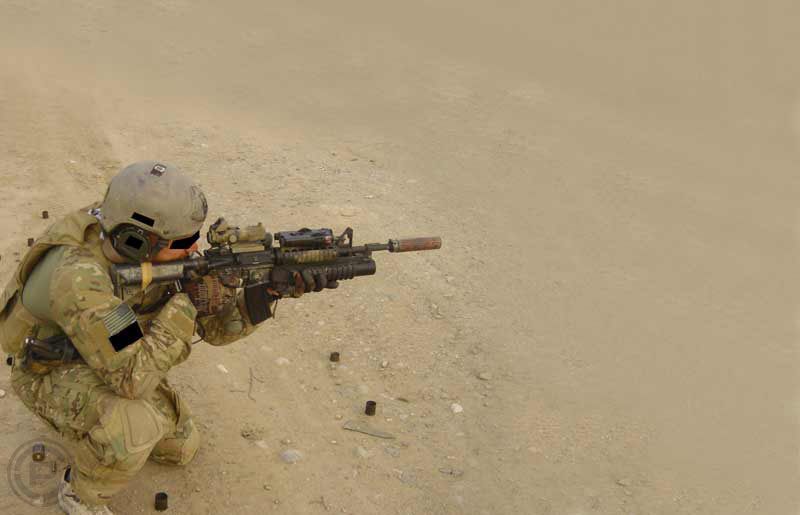
Army


So Here We See a Short detail about the army.An army in the broadest sense, is the land-based military branch, service branch or armed service of a nation or state. It may also include other branches of the military such as the air force via means of aviation corps. Within a national military force, the word army may also mean a field army an army composed of full-time career soldiers who 'stand over', in other words, who do not disband during times of peace. They differ from army reserves who are activated only during such times as war or natural disasters.
In several countries, the army is officially called the Land Army to differentiate it from an air force called the Air Army, notably France. In such countries, the word "army" on its own retains its connotation of a land force in common usage. The current largest army in the world, by number of active troops, is the People's Liberation Army of China with 2,250,000 active troops and 800,000 reserve personnel followed by the Indian Army with 1,129,000 active troops and 960,000 reserve personnel.
By convention, irregular military is understood in contrast to regular armies which grew slowly from personal bodyguards or elite militia. Regular in this case refers to standardized doctrines, uniforms, organizations, etc. Regular military can also refer to full-time status (standing army), versus reserve or part-time personnel. Other distinctions may separate statutory forces (established under laws such as the National Defence Act), from de facto "non-statutory" forces such as some guerrilla and revolutionary armies. Armies may also be expeditionary (designed for overseas or international deployment) or fencible (designed for – or restricted to – homeland defence).
Army are the national guard of the country.They are also known as national gurdian.
Armies as armed services
- Corps: A Corps usually consists of two or more Divisions and is commanded by a Lieutenant General.
- Division: Each division is commanded by a Major General, and usually holds three Brigades including infantry, artillery, engineers and communications units in addition to logistics (supply and service) support to sustain independent action. Except for the Divisions operating in the mountains, all the Divisions have at least one armored unit, some have even more depending upon their functionality. The basic building block of all ground force combat formations is the infantry division. A typical division would hold three infantry brigades.
- Brigade: A Brigade is under the command of a Brigadier General or sometimes is commanded by a Colonel and comprises three or more Battalions of different units depending on its functionality. An independent brigade would be one that primarily consists of an artillery unit, an infantry unit, an armour unit and logistics to support its actions. Such a brigade is not part of any division and is under direct command of a corps.
- Battalion: Each battalion is commanded by a Colonel or sometimes by Lieutenant Colonel who commands roughly 500 to 750 soldiers. This number varies depending on the functionality of the regiment. A battalion comprises 3–5 companies (3 rifle companies, a fire support company and headquarters company) or its functional equivalent such as batteries (artillery) or squadrons (armour and cavalry), each under the command of a Major. The Company can be divided into platoons, each of which can again be divided into sections or squads (Terminology is nationality and even unit specific)
Field army
A field army is composed of a headquarters, army troops, a variable number of corps, typically between three to four, and a variable number of divisions, also between three to four. A battle is influenced at the Field Army level by transferring divisions and reinforcements from one corps to another to increase the pressure on the enemy at a critical point. Field armies are controlled by a General or Lieutenant General.